

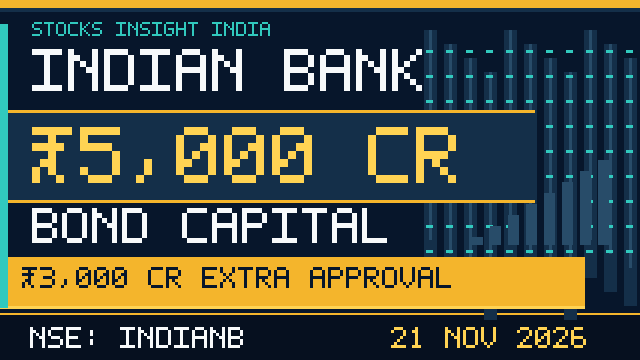
Indian Bank (NSE: INDIANB; BSE: 532814) ने 20 November 2026 को board meeting के बाद capital funding plan में एक अहम बदलाव बताया है। Bank को additional ₹3,000 crore तक Basel III-compliant Additional Tier-1 (AT1) और/या Tier-2 bonds जारी करने की मंजूरी मिली। पहले से ₹2,000 crore की approval थी; दोनों को मिलाकर कुल authorised AT1/Tier-2 capital plan ₹5,000 crore तक हो गया है। सबसे जरूरी बात: approval मिली है, लेकिन ₹5,000 crore cash अभी raise हो चुका है—ऐसा कंपनी ने नहीं कहा है।
News date: Saturday, 21 November 2026. Original exchange filing: Friday, 20 November 2026 (board meeting concluded 18:45 IST; BSE disclosure subsequently published). Latest reference financial quarter ended 30 September 2026 (Q2 FY27). NSE पर शनिवार को normal equity trading बंद है, इसलिए यह खबर किसी नए Saturday share-price move का दावा नहीं करती।
Indian Bank ने exactly क्या approve किया?
Bank की 20 November 2026 की BSE regulatory filing (Ref. ISC/592/2026-27) के मुताबिक board ने ₹3,000 crore additional AT1/Tier-2 capital raise करने की approval दी। यह ₹2,000 crore existing approval के ऊपर है। Plan FY 2026-27 में जरूरत के मुताबिक one or more tranches में Basel III-compliant bonds के जरिए execute हो सकता है।
| Capital plan component | Approved ceiling (₹ crore) | Status as of 21 Nov 2026 |
|---|---|---|
| पहले से approved AT1 / Tier-2 bonds | 2,000 | Previous board approval, not evidence of full issuance |
| 20 Nov board की additional approval | 3,000 | Newly approved ceiling |
| Total AT1 / Tier-2 approved plan | 5,000 | Approval ceiling; actual issued amount not confirmed |
यह equity QIP नहीं है, इसलिए इस announcement को सीधे नए ordinary equity shares या immediate equity dilution से जोड़ना गलत होगा। October 15 की filing में separately ₹5,000 crore तक long-term infrastructure bonds की approval भी थी; वह इस AT1/Tier-2 capital ceiling से अलग purpose और instrument है। 15 October 2026 NSE-filed board outcome में पुरानी ₹2,000 crore AT1/Tier-2 ceiling भी दर्ज है।
AT1 और Tier-2 Bonds क्या होते हैं?
AT1 capital
Additional Tier-1 bonds ऐसे capital instruments होते हैं जिनमें Basel III की loss-absorption conditions हो सकती हैं। इनके coupon, call option और regulatory terms सामान्य fixed deposits से अलग होते हैं। AT1 का issuance और regulator की eligibility conditions, bank के eligible capital buffer को support कर सकते हैं; पर exact impact issue के terms पर निर्भर होगा।
Tier-2 capital
Tier-2 instruments generally subordinated debt होते हैं जो eligible regulatory capital बढ़ाने में मदद करते हैं। इनके coupon और maturity का खर्च future earnings या funding cost को प्रभावित कर सकता है। कितनी रकम AT1 और कितनी Tier-2 में जाएगी, उसका final split और coupon rate 20 November announcement में नहीं बताया गया।
Indian Bank के Latest Q2 FY27 Numbers: क्यों जरूरी है Capital Buffer?
Bank की official standalone reviewed results, quarter ended 30 September 2026 में ये आंकड़े दर्ज हैं। रुपये करोड़ में आय/मुनाफा और बाकी ratios प्रतिशत में हैं। तुलना उसी period के Q2 FY26 (quarter ended 30 September 2025) के साथ की गई है; figures standalone basis पर हैं।
| Standalone indicator | Q2 FY27 / 30 Sep 2026 | Q2 FY26 / 30 Sep 2025 |
|---|---|---|
| Total income (₹ cr) | 23,058.62 | 19,076.57 |
| Net profit (₹ cr) | 3,462.24 | 3,018.22 |
| Basel III capital adequacy (CRAR) | 16.21% | 17.31% |
| Common Equity Tier-1 (CET1) | 15.18% | 14.80% |
| Gross NPA ratio | 1.61% | 2.60% |
| Net NPA ratio | 0.14% | 0.16% |
इससे समझ आता है कि profit और asset quality दोनों में सालाना improvement दिखा, लेकिन standalone CRAR साल भर पहले के 17.31% से घटकर 16.21% रहा, जबकि CET1 14.80% से बढ़कर 15.18% हुआ। CRAR और CET1 दोनों अलग measures हैं—इनकी movement एक जैसी होना जरूरी नहीं। More lending और risk-weighted assets, capital buffer की जरूरत बढ़ा सकते हैं। लेकिन सिर्फ higher bond approval से आगे का CRAR या profitability अपने आप तय नहीं हो जाती।
Fundamentals पर संभावित असर क्या होगा?
- Capital adequacy: Eligible AT1/Tier-2 bonds वास्तव में issue और count होने पर regulatory capital headroom बढ़ सकता है, जिसके कारण loan growth को support मिल सकता है। अभी amount raised और actual CRAR benefit confirm नहीं है।
- Profitability and cost: नए bond coupon और fees future funding cost बढ़ा सकते हैं। Higher capital buffer से long-term business expansion संभव है, पर net benefit loan growth, credit costs और coupon pricing पर निर्भर करेगा।
- Liquidity: Actual bond placement से bank को liquidity मिल सकती है; board approval अकेले cash inflow नहीं है।
- Risk management: AT1/Tier-2 instruments में subordination, loss-absorption, refinancing और market-rate risks होते हैं। Terms, credit quality और regulatory eligibility पढ़ना जरूरी होगा।
- Equity holders: Bond funding में सामान्य equity issuance जैसा तत्काल share dilution नहीं होता, लेकिन interest/distribution cost और risk-weighted asset growth earnings metrics को प्रभावित कर सकते हैं।
अभी क्या पता नहीं है?
20 November की capital-approval filing में final bond allotment date, coupon/yield, AT1-versus-Tier-2 split, investors, issue price, allotment quantity या proceeds received की पुष्टि नहीं की गई। इसलिए इन्हें अनुमान से भरना गलत होगा। Next verification milestone होगा actual tranche issuance/allotment filing, उसके final terms और अगली quarter में regulatory capital ratios का update।
Market open/close context
21 November 2026, Saturday: Indian equity market में regular NSE/BSE trading नहीं होती। Latest preceding regular trading session Friday, 20 November 2026 था; सामान्य अगला कारोबारी दिन Monday, 23 November 2026 है। इसके बाद Tuesday, 24 November 2026 को Guru Nanak Jayanti की exchange holiday सूचीबद्ध है। NSE exchange calendar और market timings देखें। यह article किसी unavailable Saturday trading price या speculative Monday reaction को reported fact नहीं बताता।
Related Reading
Bank sector के दूसरे listed players के Q2 FY27 profitability, NIM, Gross NPA और Net NPA की समान-अवधि तुलना के लिए Axis Bank, HDFC Bank, ICICI Bank और SBI Fundamental Comparison पढ़ें।
Original Sources और Publication Dates
- Indian Bank exchange filing, 20 November 2026 (BSE official attachment; board outcome, additional ₹3,000 cr approval).
- Indian Bank, NSE-filed reviewed Q2 FY27 standalone/consolidated results, 15 October 2026 (period ended 30 September 2026).
- NSE India, official 2026 holiday calendar and equity market timings.
Verification note: BSE PDF URL is the exchange-original filing destination; where direct PDF access is restricted, the regulatory filing text was additionally cross-checked against exchange announcement extracts and dated financial reporting. No subscription-only StockEdge data were claimed or used.
Disclaimer: This article is educational financial news, not investment advice. It makes no buy/sell recommendation, price target or prediction. Readers should review all relevant regulatory disclosures and consider their own risks before investing.



Pingback: Embassy Developments ₹250 Cr NCD Plan Approved: Debt Risks और Funding Strategy | 21 Nov 2026 - Stocks Insight India