

| Quick Answer Mutual Fund एक professionally managed investment pool है। आपका पैसा दूसरे investors के पैसे के साथ combine होता है और Fund Manager उसे shares, bonds, gold या दूसरी securities में invest करता है। Beginners के लिए सही first step है: अपना goal define करें, emergency fund बनाएँ, KYC complete करें, suitable fund category समझें और manageable SIP से disciplined investing शुरू करें। |
Introduction: Mutual Fund Investing Itna Popular Kyun Hai?
India में investing को लेकर awareness तेजी से बढ़ रही है। लेकिन beginners के लिए Stock Market confusing लग सकता है: कौन-सी company चुनें, कब buy करें, portfolio को कैसे diversify करें और daily market movements को कैसे track करें? Mutual Funds इन समस्याओं को आसान बनाते हैं, क्योंकि investment decisions एक professional fund-management team लेती है।
अगर आप “how to invest in mutual fund” या “what is mutual fund” search कर रहे हैं, तो यह guide आपको basics से practical action तक ले जाएगी। इस article का उद्देश्य किसी specific scheme को recommend करना नहीं, बल्कि आपको informed decision लेने की मजबूत foundation देना है।
What Is Mutual Fund? Mutual Fund क्या होता है?
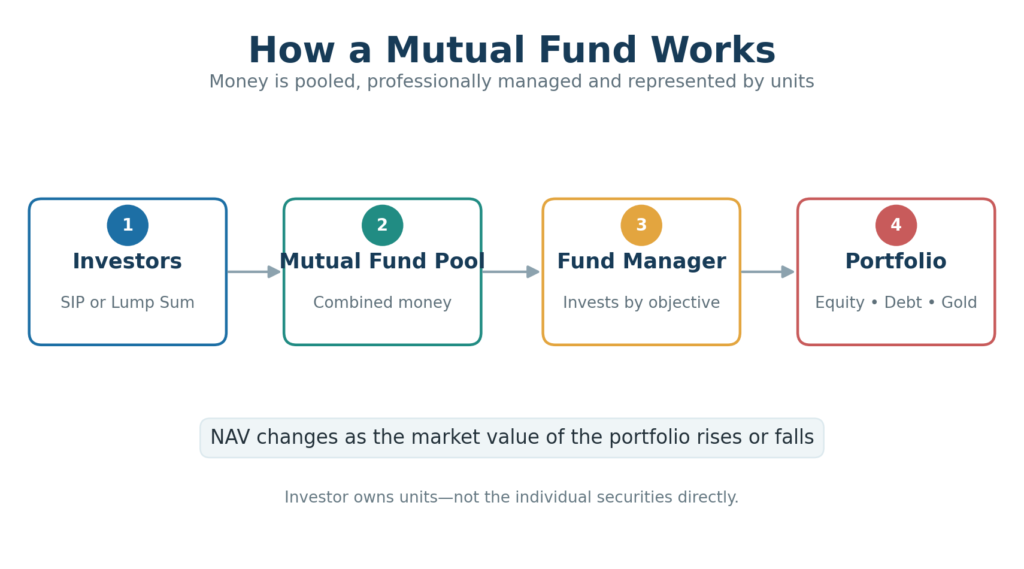
Mutual Fund एक collective investment vehicle है। बहुत सारे investors एक scheme में पैसा invest करते हैं। Asset Management Company (AMC) की fund-management team scheme के stated objective के अनुसार money invest करती है—जैसे equity shares, government securities, corporate bonds, money-market instruments, gold-related assets या इनका combination।
आपको scheme में “units” मिलती हैं। हर unit की value को Net Asset Value (NAV) कहा जाता है। NAV आमतौर पर scheme के assets की market value में से liabilities घटाकर और उसे outstanding units से divide करके calculate की जाती है। NAV का ₹10 या ₹500 होना fund के cheap या expensive होने का proof नहीं है; portfolio quality, strategy, cost, risk और goal suitability ज्यादा important हैं।
Mutual Fund कैसे काम करता है?
- Investor scheme में Lump Sum या SIP के माध्यम से पैसा invest करता है।
- AMC उस scheme के objective के अनुसार portfolio manage करती है।
- Market value बदलने पर scheme की NAV बढ़ या घट सकती है।
- Investor redemption request देकर applicable NAV पर units sell कर सकता है; exit load, lock-in, cut-off rules और taxes लागू हो सकते हैं।
Important Mutual Fund Terms
| Term | Easy Meaning |
| AMC | Asset Management Company, जो Mutual Fund schemes को operate करती है। |
| NAV | Scheme की per-unit value; high NAV का मतलब automatically expensive fund नहीं है। |
| SIP | एक fixed amount को regular interval—आमतौर पर monthly—invest करने का method। |
| Lump Sum | एक बार में comparatively larger amount invest करना। |
| Expense Ratio | Scheme management और operating expenses की annual percentage cost, जो NAV में adjusted होती है। |
| Exit Load | Specified period से पहले redeem करने पर लगने वाला possible charge। |
| AUM | Assets Under Management—scheme या AMC के managed assets की total value। |
| Benchmark | वह index जिसके against scheme का performance compare किया जा सकता है। |
| Riskometer | SEBI-prescribed risk label—Low से Very High तक—जो scheme का risk समझने में मदद करता है। |
Types of Mutual Funds in India
Mutual Fund चुनने से पहले उसकी category समझना जरूरी है। कोई भी “Best Fund” सभी investors के लिए best नहीं होता; सही fund वही है जो आपके goal, time horizon और risk capacity के suitable हो।
1. Equity Mutual Funds
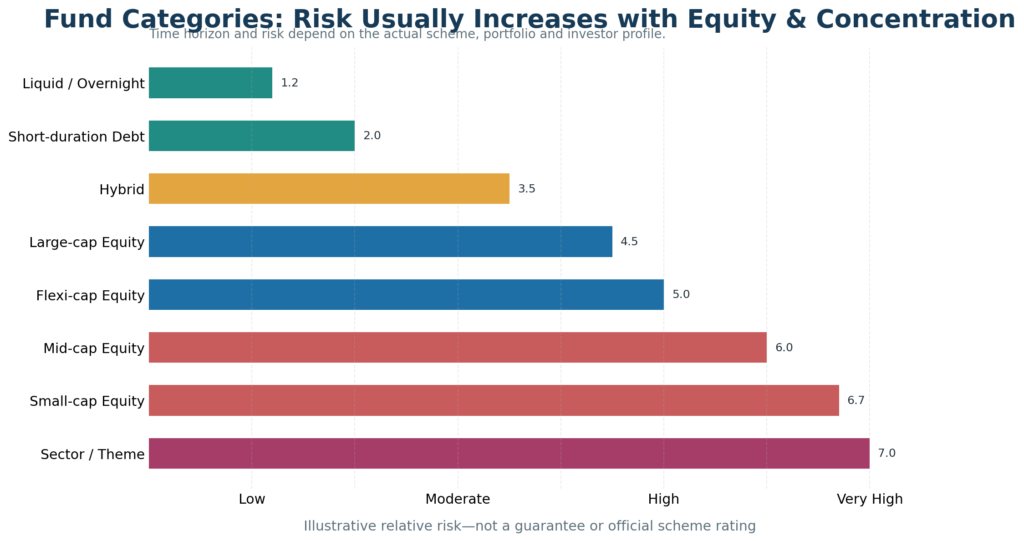
Equity Funds मुख्य रूप से shares में invest करते हैं। इनमें short-term volatility अधिक हो सकती है, इसलिए इन्हें सामान्यतः long-term goals के लिए consider किया जाता है। Categories में large-cap, mid-cap, small-cap, flexi-cap, focused, value/contra, sectoral/thematic और ELSS शामिल हो सकते हैं।
- Large-cap funds: relatively established large companies; still market-linked and not risk-free.
- Mid-cap and small-cap funds: higher growth potential के साथ generally higher volatility।
- Flexi-cap funds: Fund Manager different market capitalisations में allocation कर सकता है।
- Sectoral/thematic funds: concentration risk अधिक होता है; beginners को extra caution चाहिए।
- ELSS: tax-saving equity scheme with statutory lock-in; tax benefit availability depends on the tax regime and current law.
2. Debt Mutual Funds
Debt Funds bonds, treasury bills, government securities, commercial paper और अन्य fixed-income instruments में invest करते हैं। ये fixed-return products नहीं हैं। इनमें interest-rate risk, credit risk और liquidity risk हो सकता है। Category का selection आपके goal duration के साथ align होना चाहिए—जैसे overnight/liquid, ultra-short, short-duration, corporate bond या gilt।
3. Hybrid Mutual Funds
Hybrid Funds equity और debt का combination रखते हैं। Aggressive hybrid, conservative hybrid, balanced advantage/dynamic asset allocation और multi-asset जैसी categories का risk mix अलग हो सकता है। “Hybrid” शब्द को low-risk guarantee न समझें; actual asset allocation और Riskometer देखें।
4. Index Funds and ETFs
Index Fund किसी market index को track करने की कोशिश करता है। Fund Manager individual stocks चुनकर benchmark को beat करने की कोशिश नहीं करता। Tracking error/difference, expense ratio और index quality important factors हैं। ETF exchange पर trade होता है और आमतौर पर Demat/Trading Account चाहिए; regular index mutual fund को AMC या platform से बिना Demat भी खरीदा जा सकता है।
5. Solution-Oriented and Other Funds
Retirement funds, children’s funds, gold funds, international funds aur fund-of-funds अलग objectives aur risks रखते हैं. Lock-in, taxation, currency risk, overseas limits और underlying costs समझकर ही invest करें.
SIP vs Lump Sum: क्या Difference है?
| Point | SIP | Lump Sum |
| Investment style | Regular fixed amount | One-time amount |
| Cash-flow fit | Salary earners ke लिए convenient | Bonus, maturity proceeds या surplus cash |
| Market timing pressure | Investment dates spread होती हैं | Entry timing ka impact अधिक हो सकता है |
| Discipline | Auto-debit से consistency | Investor ko future investing अलग से plan करनी होगी |
| Return guarantee? | No | No |
SIP कोई अलग investment product नहीं है; यह Mutual Fund में invest करने का method है। SIP rupee-cost averaging में मदद कर सकती है—prices कम होने पर ज्यादा units और अधिक होने पर कम units मिल सकती हैं—लेकिन यह profit की guarantee नहीं देती। Negative market phase में SIP portfolio भी गिर सकता है।
How to Invest in Mutual Fund: Step-by-Step Guide for Beginners
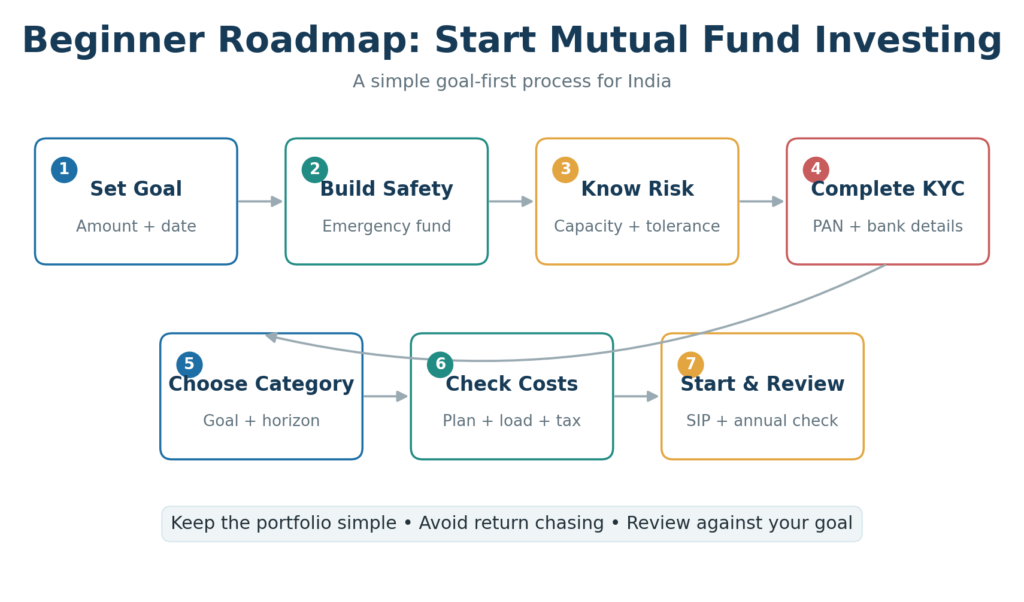
Step 1: Financial Goal Define करें
Investment product चुनने से पहले अपना goal तय करें: emergency reserve, house down payment, higher education, child’s education, retirement या wealth creation। Goal amount, target date और priority लिखें। केवल “higher return चाहिए” एक स्पष्ट financial goal नहीं है।
Step 2: Emergency Fund और Insurance Ready रखें
Market-linked investment शुरू करने से पहले ideally 3–6 months के essential expenses के बराबर emergency fund और adequate health insurance रखें। Dependents हों तो suitable term life insurance consider करें। Emergency money को volatile equity fund में park करना सामान्यतः उचित नहीं है।
Step 3: Risk Profile समझें
Risk tolerance का अर्थ केवल यह नहीं है कि आप verbally कितना risk लेने को तैयार हैं। Risk capacity आपकी income stability, liabilities, dependents, goal deadline और loss absorb करने की ability पर depend करती है। Risk need भी देखें—goal achieve करने के लिए वास्तव में कितना return आवश्यक है।
Step 4: Time Horizon के अनुसार Category Choose करें
Short-term goal के लिए high equity exposure dangerous हो सकता है, क्योंकि market recovery की कोई guarantee नहीं होती। Long-term goal के लिए equity consider की जा सकती है, लेकिन allocation investor-specific होना चाहिए। जैसे-जैसे goal पास आए, volatility risk कम करने के लिए gradual rebalancing useful हो सकती है।
Step 5: Mutual Fund KYC Complete करें
India में mutual fund investment के लिए KYC mandatory है. सामान्यतः PAN, identity/address details, mobile/email, bank account proof और required declarations की जरूरत होती है; process provider और investor status के अनुसार vary कर सकता है. Online KYC/video verification available हो सकती है. Name, PAN और bank details में mismatch avoid करें.
Step 6: Investment Route Choose करें
- AMC website/app: सीधे Fund House के platform से।
- Registrar/industry-supported platforms: availability and features verify करें.
- Investment platform/broker app: convenience, charges and plan type carefully check करें.
- AMFI-registered distributor: guidance मिल सकती है; investment usually Regular Plan में होता है.
- SEBI-registered investment adviser: fee-based personalised advice; registration status verify करें.
Step 7: Direct Plan vs Regular Plan Decide करें
Direct Plan में distributor commission नहीं होता, इसलिए उसी scheme के Regular Plan की तुलना में expense ratio generally lower होता है; दोनों का NAV अलग होता है. Regular Plan में distributor support/servicing शामिल हो सकती है. Direct Plan तभी चुनें जब आप fund selection, allocation, review और behavioural discipline responsibly manage कर सकते हों—or fee-only professional advice ले रहे हों.
Step 8: Growth vs IDCW Option समझें
Growth Option में scheme के gains fund में बने रहते हैं और NAV में reflect होते हैं। IDCW (Income Distribution cum Capital Withdrawal) payout guaranteed नहीं होता; payout से NAV कम होती है और tax implications हो सकते हैं। Long-term compounding goal के लिए beginners अक्सर Growth Option को आसान पाते हैं, लेकिन suitability individual situation पर depend करती है।
Step 9: Fund Select करने से पहले Checklist Use करें
- Scheme objective and category आपके goal से match करते हैं?
- Riskometer और portfolio concentration acceptable है?
- Expense ratio, exit load और tracking difference/error क्या है?
- Performance consistent है या सिर्फ recent 1-year return attractive दिख रहा है?
- Fund ने relevant benchmark और category के against different market phases में कैसा perform किया?
- Portfolio quality, credit quality, duration और turnover category के हिसाब से sensible हैं?
- Fund manager/process में frequent unexplained changes तो नहीं?
- Scheme Information Document, Key Information Memorandum और latest factsheet पढ़ी है?
Step 10: Small, Sustainable SIP से Start करें
ऐसी SIP amount चुनें जिसे market fall के दौरान भी continue कर सकें। Salary आने के कुछ दिन बाद auto-debit date set करें। Income बढ़ने पर annual step-up consider करें। यदि scheme permit करती है तो ₹500 या ₹1,000 से शुरुआत की जा सकती है; amount से ज्यादा important consistency और goal alignment है।
Step 11: Nomination और Records Complete करें
Nominee details, bank mandate, email/mobile और tax status updated रखें। Statements, capital-gain reports और transaction confirmations को securely store करें। परिवार के किसी भरोसेमंद member को investments का basic record पता होना चाहिए।
Step 12: Review—But Don’t Over-Monitor
Daily NAV checking unnecessary anxiety बढ़ा सकती है। Portfolio को सामान्यतः 6–12 months में, या goal, income, scheme और asset allocation में major change होने पर review करें। Underperformance को relevant benchmark/category और suitable time period में evaluate करें; केवल one bad quarter के कारण switch करना costly mistake हो सकती है।
How to Choose the Best Mutual Fund for Beginners?
Google पर “best mutual fund for beginners” search करने पर कई top-return lists मिलेंगी. लेकिन past return अकेले fund selection का आधार नहीं होना चाहिए. Beginner-friendly approach का मतलब simple, diversified, low-cost और goal-aligned portfolio है—not maximum number of funds.
| Simple Rule एक ही category के multiple similar funds खरीदने से automatic diversification नहीं मिलता। उनके portfolios overlap कर सकते हैं। पहले asset allocation तय करें, फिर हर portfolio role के लिए limited और अच्छी तरह समझी गई scheme चुनें। |
Mutual Fund Returns: कितना Return मिल सकता है?
Mutual funds fixed return promise नहीं करते. Return market conditions, asset class, valuation, interest rates, credit events, currency movement, costs और holding period पर depend करता है. Historical CAGR future guarantee नहीं है.
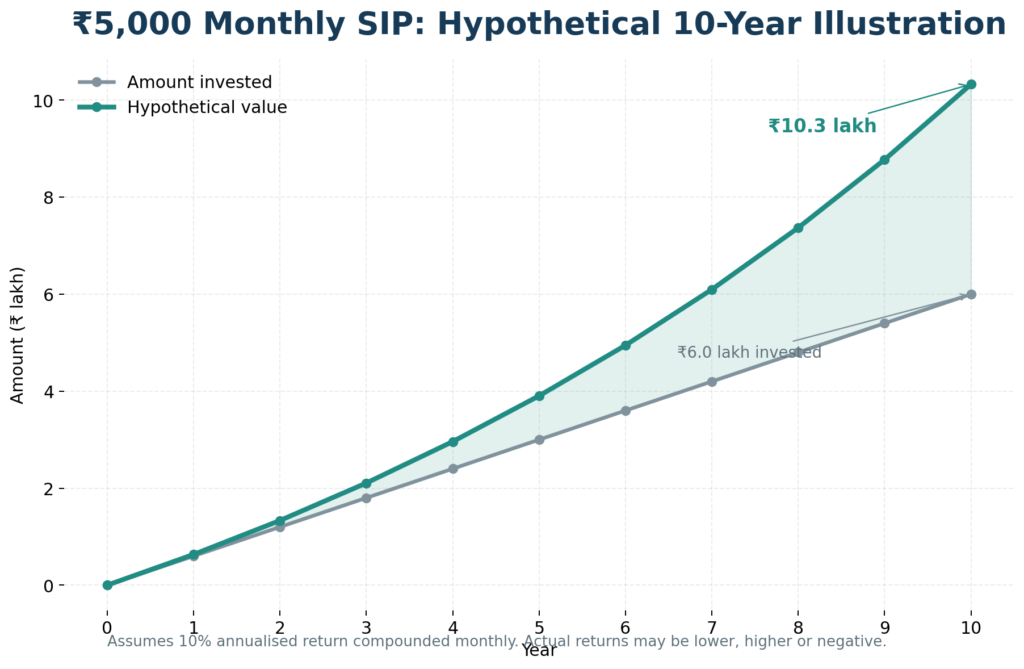
Example only: यदि ₹5,000 monthly SIP 10 years तक continue की जाए और hypothetical annualised return 10% माना जाए, invested amount ₹6,00,000 होगा और estimated value करीब ₹10.3 lakh हो सकती है. Actual return lower, higher या negative भी हो सकता है; calculation tax और other variations ignore करती है.
Costs You Must Understand
- Expense Ratio: scheme-level recurring cost, NAV में adjusted. Lower cost useful है, but category suitability और process भी important हैं.
- Exit Load: certain period के भीतर redemption पर लागू हो सकता है; scheme document देखें.
- Transaction/Platform/Advisory Charges: route के अनुसार अलग हो सकते हैं.
- Tax and STT: fund type और transaction पर depend करते हैं.
- Tracking Difference: index fund/ETF return और underlying index return के बीच practical gap.
Mutual Fund Taxation in India: Beginner Overview
Taxation fund classification, purchase date, sale date, holding period, investor status और current law पर depend करती है. July 2026 तक broadly, equity-oriented funds की units 12 months के भीतर sell करने पर eligible short-term capital gains 20% rate से taxed हो सकते हैं; 12 months से अधिक holding पर eligible long-term capital gains में annual ₹1.25 lakh threshold के ऊपर 12.5% tax लागू हो सकता है, subject to law and conditions.
Specified debt-oriented mutual funds—particularly units acquired on or after 1 April 2023—के gains generally investor की applicable slab rate पर taxable हो सकते हैं, irrespective of holding period. Other non-equity funds की classification और holding-period rules अलग हो सकते हैं. IDCW income generally investor की applicable slab rate पर taxable होती है. Surcharge, cess, set-off rules, TDS for certain investors और future law changes अलग impact डाल सकते हैं.
| Tax caution Tax rules frequently change होते हैं. Transaction से पहले latest Income Tax Department/AMFI guidance देखें और complex case, NRI status या large redemption के लिए qualified tax professional से advice लें. |
Risks of Mutual Funds
- Market risk: equity और bond prices fall हो सकती हैं.
- Credit risk: bond issuer payment default या downgrade कर सकता है.
- Interest-rate risk: rates change होने पर debt securities की value बदल सकती है.
- Liquidity risk: stressed market में holdings sell करना difficult हो सकता है.
- Concentration risk: limited sector, theme, company या issuer exposure से volatility बढ़ सकती है.
- Currency/geopolitical risk: international investments प्रभावित हो सकते हैं.
- Behavioural risk: panic selling, return chasing और frequent switching investor returns damage कर सकते हैं.
Common Mistakes Beginners Should Avoid
- सिर्फ highest past return देखकर fund खरीदना।
- Emergency money को equity fund में लगाना.
- Riskometer, exit load और scheme documents ignore करना.
- बहुत ज्यादा funds खरीदकर portfolio को complicated बनाना।
- Market fall के दौरान SIP बंद करके loss lock करना, without goal-based reasoning.
- Regular Plan को गलती से Direct Plan समझना—or vice versa.
- IDCW को guaranteed interest मानना.
- Tax और capital-gain records ignore करना.
- Social-media tips या unregistered advice पर blindly act करना.
- Short-term goal के लिए long-term/high-risk product चुनना.
A Practical Beginner Action Plan
| Timeline | Action |
| Day 1 | Goals, deadline, monthly surplus और existing debts लिखें. |
| Day 2 | Emergency fund और insurance gaps assess करें. |
| Day 3 | Risk profile और target asset allocation समझें. |
| Day 4 | KYC status, PAN, bank and nominee details ready करें. |
| Day 5 | Relevant categories और 2–3 candidate schemes compare करें. |
| Day 6 | Scheme documents, costs, Riskometer और tax basics पढ़ें. |
| Day 7 | Affordable SIP start करें और annual review date calendar में रखें. |
Frequently Asked Questions (FAQs)
1. What is mutual fund in simple words?
Mutual fund many investors ka pooled money hai, जिसे professional team defined strategy के according securities में invest करती है. Investor scheme units own करता है.
2. How to invest in mutual fund for the first time?
Goal define करें, risk समझें, KYC complete करें, investment route और plan type choose करें, scheme documents compare करें, bank mandate/nomination complete करें और suitable SIP या lump sum से start करें.
3. Can I start a mutual fund with ₹500?
कई schemes small SIP amounts allow करती हैं, लेकिन minimum amount scheme-specific है. Current scheme details check करें.
4. Is SIP safe?
SIP disciplined investing method है, safety guarantee नहीं. Underlying mutual fund का market risk SIP पर भी apply होता है.
5. Can I lose money in mutual funds?
Yes. NAV fall हो सकती है और capital loss possible है, especially short term या high-risk categories में.
6. Is mutual fund better than FD?
दोनों अलग products हैं. FD generally predictable interest और deposit rules के साथ आता है; mutual fund market-linked है. Choice goal, risk, liquidity, tax और horizon पर depend करती है.
7. Direct or Regular mutual fund—which is better?
Direct usually lower expense ratio देता है; Regular distributor support देता है. Better option आपकी knowledge, advice needs और ability to manage portfolio पर depend करता है.
8. How many mutual funds should a beginner invest in?
कोई universal number नहीं. Simple goals के लिए limited funds often sufficient हो सकते हैं. Quantity से अधिक asset allocation, role clarity और overlap matter करते हैं.
9. When should I stop SIP?
Goal achievement, cash-flow emergency, changed suitability या planned rebalancing valid reasons हो सकते हैं. केवल temporary market fall देखकर impulsively stop न करें.
10. Do I need a demat account?
Normal open-ended mutual fund units के लिए demat account generally mandatory नहीं. ETFs trade करने के लिए demat/trading account usually required होता है.
11. Can I withdraw mutual fund anytime?
Many open-ended schemes redeemable होती हैं, but exit load, cut-off, settlement time और tax apply हो सकते हैं. ELSS and certain solution-oriented funds have lock-ins.
12. Where can I verify an adviser or distributor?
SEBI’s intermediary/registered adviser resources and AMFI’s distributor/ARN resources पर credentials verify करें.
Conclusion
Mutual Fund investing को complicated होने की जरूरत नहीं है। सही शुरुआत “सबसे ज्यादा return देने वाला fund” ढूँढने से नहीं, बल्कि clear financial goal, emergency protection, realistic risk assessment और disciplined process से होती है।
अब जब आप समझ चुके हैं कि what is mutual fund और how to invest in mutual fund, अगला step है अपनी financial situation लिखना, KYC check करना और simple goal-based plan बनाना। छोटी शुरुआत करें, regularly invest करें, costs और taxes समझें, portfolio को periodically review करें और market noise के बजाय long-term discipline पर focus रखें।
| Mandatory disclaimer This article is for educational and informational purposes only and is not investment, tax or legal advice. It does not recommend any mutual fund scheme, AMC or expected return. Mutual fund investments are subject to market risks; read all scheme-related documents carefully. Consider consulting a SEBI-registered investment adviser and a qualified tax professional for personalised advice. |
Official References
- SEBI — FAQs for Mutual Fund Investors: https://www.sebi.gov.in/sebi_data/faqfiles/sep-2024/1727242783639.pdf
- AMFI — Introduction to Mutual Funds: https://www.amfiindia.com/investor/knowledge-center-info?zoneName=IntroductionMutualFunds
- AMFI — Tax Regime for Mutual Funds: https://www.amfiindia.com/investor/knowledge-center-info?zoneName=TaxRegimeForMutualFunds
- Income Tax Department — Capital Gains: https://www.incometaxindia.gov.in/w/capital-gain